Time and Information in Evolution
Abstract
Wilf and Ewens argue in a recent paper that there is plenty of time for evolution to occur. They base this claim on a mathematical model in which beneficial mutations accumulate simultaneously and independently, thus allowing changes that require a large number of mutations to evolve over comparatively short time periods. Because changes evolve independently and in parallel rather than sequentially, their model scales logarithmically rather than exponentially. This approach does not accurately reflect biological evolution, however, for two main reasons. First, within their model are implicit information sources, including the equivalent of a highly informed oracle that prophesies when a mutation is “correct,” thus accelerating the search by the evolu- tionary process. Natural selection, in contrast, does not have access to information about future benefits of a particular muta- tion, or where in the global fitness landscape a particular mutation is relative to a particular target. It can only assess mutations based on their current effect on fitness in the local fitness landscape. Thus the presence of this oracle makes their model radically different from a real biological search through fitness space. Wilf and Ewens also make unrealistic biological assumptions that, in effect, simplify the search. They assume no epistasis between beneficial mutations, no linkage between loci, and an unreal- istic population size and base mutation rate, thus increasing the pool of beneficial mutations to be searched. They neglect the effects of genetic drift on the probability of fixation and the negative effects of simultaneously accumulating deleterious muta- tions. Finally, in their model they represent each genetic locus as a single letter. By doing so, they ignore the enormous sequence complexity of actual genetic loci (typically hundreds or thousands of nucleotides long), and vastly oversimplify the search for functional variants. In similar fashion, they assume that each evolutionary “advance” requires a change to just one locus, despite the clear evidence that most biological functions are the product of multiple gene products working together. Ignoring these biological realities infuses considerable active information into their model and eases the model’s evolutionary process.Author Biography
-
Robert J. Marks II, Evolutionary Computing and Information Theory; Baylor UniversityRobert J. Marks II is a Distinguished Professor of Engineering in the Department of Engineering at Baylor University.
Marks is the recipient of numerous professional awards, including a NASA Tech Brief Award and a best paper award from the American Brachytherapy Society for prostate cancer research. He is Fellow of both IEEE and The Optical Society of America. His consulting activities include Microsoft Corporation, Pacific Gas & Electric, and Boeing Computer Services. His research has been funded by organizations such as the National Science Foundation, General Electric, Southern California Edison, EPRI, the Air Force Office of Scientific Research, the Office of Naval Research, the Whitaker Foundation, Boeing Defense, the National Institutes of Health, The Jet Propulsion Lab, Army Research Office, and NASA.
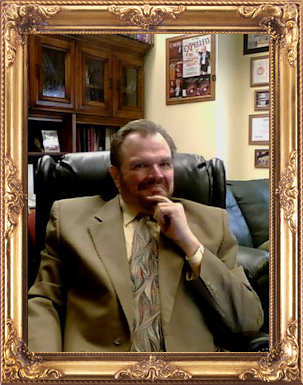
Professor Marks was awarded the IEEE Outstanding Branch Councilor Award, The IEEE Centennial Medal, the IEEE Neural Networks Society Meritorious Service Award, the IEEE Circuits and Systems Society Golden Jubilee Award and, for 2007, the IEEE CIS Chapter of the IEEE Dallas Section Volunteer of the Year award. He was was named a Distinguished Young Alumnus of Rose-Hulman Institute of Technology, is an inductee into the Texas Tech Electrical Engineering Academy, and in 2007 was awarded the Banned Item of the Year from the Discovery Institute. Dr. Marks served for 17 years as the faculty advisor to the University of Washington's chapter of Campus Crusade for Christ. In 2010, he was listed by CollegeCrunch.com as one of "The 20 Most Brilliant Christian Professors".
Robert J. Marks II has lots and lots of publications. Some of them are really good. Ten of Dr. Marks’ papers have been reproduced in volumes of collections of seminal papers.
Dr. Marks is the author of the books
- Handbook of Fourier Analysis and Its Applications, Oxford University Press -2009,
- Introduction to Shannon Sampling and Interpolation Theory (Springer Verlag, 1991), and
- Neural Smithing : Supervised Learning in Feedforward Artificial Neural Networks (MIT Press, 1999) - with Russ Reed.
He is the editor or co-editor of four other books. More than you want to know about Dr. Marks is on the websites http://RobertMarks.org and http://EvoInfo.org.
Downloads
Published
Issue
Section
License
Authors who publish in BIO-Complexity agree to the following terms:
Authors retain copyright and grant BIO-Complexity the right of first publication with the work simultaneously licensed under a Creative Commons Attribution License, which allows others to share the work, provided they acknowledgement the work's authorship and initial publication in BIO-Complexity.
Authors are able to enter into separate, additional contractual arrangements for the non-exclusive distribution of BIO-Complexity's published version of the work (e.g., post it to an institutional repository or publish it in a book), with an acknowledgement of its initial publication in BIO-Complexity.
Because you the author (including any co-authors) will claim copyrights for the final version of your work published in BIO-Complexity, you are responsible for ensuring that you are entitled to make this claim. In particular, you here certify that no one other than you or your co-author(s) holds the copyright to any figure or figure component included in this submission.