Active Information in Metabiology
Abstract
Metabiology is a fascinating intellectual romp in the surreal world of the mathematics of algorithmic information theory. In this world, halting oracles hunt for busy beaver numbers and busy beaver numbers unearth Chaitin’s number, knowledge of which in turn allows resolution of numerous unsolved mathematical problems, many of whose solutions would earn large cash bounties. All this, despite the fact that halting oracles can’t be implemented on a computer, a computer can never make a list of busy beaver numbers, and Chaitin’s number, always a positive real number less than one, is proven to be unknowable. The fun of metabiology is the application of these ideas to illustrate Darwinian evolution. When metabiology’s evolutionary process is stripped of the glitter of algorithmic information theory, however, what remains is a procedure similar to that used in other attempts to model Darwinian evolution, like the ev and AVIDA computer programs. Metabiology, like ev and AVIDA, succeeds because available sources of knowledge about the solution being sought can be mined. We show the mining of information from a halting oracle has striking similarities to mining information from a simple Hamming oracle. Unlike a halting oracle, however, Hamming oracles can be implemented on a computer. We demonstrate that for both oracles, information can be mined by search strategies that are analogous in some respects even though the methods differ; in both cases the search strategy used greatly influences the result. Because metabiology’s process relies on unknowable numbers and infinite resources, its reported relative performance measures can only be expressed asymptotically. That is, the results of metabiology are only proven to be true on the largest possible scale. In fact, simple simulations using bounded resources suggest the asymptote is not always approached quickly, indicating that metabiology results may only hold for scales larger than any practical system.Author Biography
-
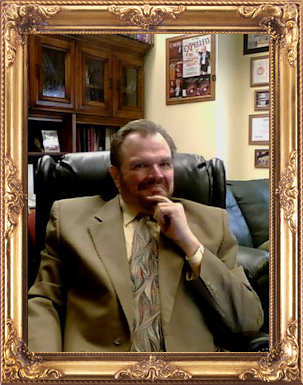
Robert J. Marks II, Evolutionary Computing and Information Theory; Baylor UniversityRobert J. Marks II is a Distinguished Professor of Engineering in the Department of Engineering at Baylor University.
Marks is the recipient of numerous professional awards, including a NASA Tech Brief Award and a best paper award from the American Brachytherapy Society for prostate cancer research. He is Fellow of both IEEE and The Optical Society of America. His consulting activities include Microsoft Corporation, Pacific Gas & Electric, and Boeing Computer Services. His research has been funded by organizations such as the National Science Foundation, General Electric, Southern California Edison, EPRI, the Air Force Office of Scientific Research, the Office of Naval Research, the Whitaker Foundation, Boeing Defense, the National Institutes of Health, The Jet Propulsion Lab, Army Research Office, and NASA.
Professor Marks was awarded the IEEE Outstanding Branch Councilor Award, The IEEE Centennial Medal, the IEEE Neural Networks Society Meritorious Service Award, the IEEE Circuits and Systems Society Golden Jubilee Award and, for 2007, the IEEE CIS Chapter of the IEEE Dallas Section Volunteer of the Year award. He was was named a Distinguished Young Alumnus of Rose-Hulman Institute of Technology, is an inductee into the Texas Tech Electrical Engineering Academy, and in 2007 was awarded the Banned Item of the Year from the Discovery Institute. Dr. Marks served for 17 years as the faculty advisor to the University of Washington's chapter of Campus Crusade for Christ. In 2010, he was listed by CollegeCrunch.com as one of "The 20 Most Brilliant Christian Professors".
Robert J. Marks II has lots and lots of publications. Some of them are really good. Ten of Dr. Marks’ papers have been reproduced in volumes of collections of seminal papers.
Dr. Marks is the author of the books
- Handbook of Fourier Analysis and Its Applications, Oxford University Press -2009,
- Introduction to Shannon Sampling and Interpolation Theory (Springer Verlag, 1991), and
- Neural Smithing : Supervised Learning in Feedforward Artificial Neural Networks (MIT Press, 1999) - with Russ Reed.
He is the editor or co-editor of four other books. More than you want to know about Dr. Marks is on the websites http://RobertMarks.org and http://EvoInfo.org.
Downloads
Published
Issue
Section
License
Authors who publish in BIO-Complexity agree to the following terms:
Authors retain copyright and grant BIO-Complexity the right of first publication with the work simultaneously licensed under a Creative Commons Attribution License, which allows others to share the work, provided they acknowledgement the work's authorship and initial publication in BIO-Complexity.
Authors are able to enter into separate, additional contractual arrangements for the non-exclusive distribution of BIO-Complexity's published version of the work (e.g., post it to an institutional repository or publish it in a book), with an acknowledgement of its initial publication in BIO-Complexity.
Because you the author (including any co-authors) will claim copyrights for the final version of your work published in BIO-Complexity, you are responsible for ensuring that you are entitled to make this claim. In particular, you here certify that no one other than you or your co-author(s) holds the copyright to any figure or figure component included in this submission.