Editorial Masthead
"To achieve its aim, BIO-Complexity is founded on the principle of critical exchange that makes science work. Specifically, the journal enlists editors and reviewers with scientific expertise in relevant fields who hold a range of views on the merit of ID, but who agree on the importance of science for resolving controversies of this kind."
Editors are invited to describe their scientific interests and perspectives in their bios.
Editor in Chief
-
Robert J. Marks II
Evolutionary Computing and Information Theory; Baylor University, United States
Biography
Robert J. Marks II is a Distinguished Professor of Engineering in the Department of Engineering at Baylor University.Marks is the recipient of numerous professional awards, including a NASA Tech Brief Award and a best paper award from the American Brachytherapy Society for prostate cancer research. He is Fellow of both IEEE and The Optical Society of America. His consulting activities include Microsoft Corporation, Pacific Gas & Electric, and Boeing Computer Services. His research has been funded by organizations such as the National Science Foundation, General Electric, Southern California Edison, EPRI, the Air Force Office of Scientific Research, the Office of Naval Research, the Whitaker Foundation, Boeing Defense, the National Institutes of Health, The Jet Propulsion Lab, Army Research Office, and NASA.
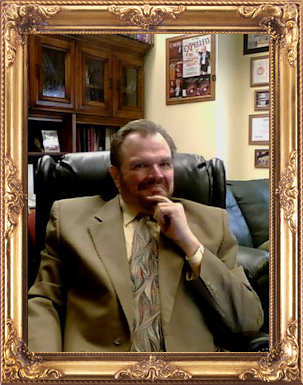
Professor Marks was awarded the IEEE Outstanding Branch Councilor Award, The IEEE Centennial Medal, the IEEE Neural Networks Society Meritorious Service Award, the IEEE Circuits and Systems Society Golden Jubilee Award and, for 2007, the IEEE CIS Chapter of the IEEE Dallas Section Volunteer of the Year award. He was was named a Distinguished Young Alumnus of Rose-Hulman Institute of Technology, is an inductee into the Texas Tech Electrical Engineering Academy, and in 2007 was awarded the Banned Item of the Year from the Discovery Institute. Dr. Marks served for 17 years as the faculty advisor to the University of Washington's chapter of Campus Crusade for Christ. In 2010, he was listed by CollegeCrunch.com as one of "The 20 Most Brilliant Christian Professors".
Robert J. Marks II has lots and lots of publications. Some of them are really good. Ten of Dr. Marks’ papers have been reproduced in volumes of collections of seminal papers.
Dr. Marks is the author of the books
- Handbook of Fourier Analysis and Its Applications, Oxford University Press -2009,
- Introduction to Shannon Sampling and Interpolation Theory (Springer Verlag, 1991), and
- Neural Smithing : Supervised Learning in Feedforward Artificial Neural Networks (MIT Press, 1999) - with Russ Reed.
He is the editor or co-editor of four other books. More than you want to know about Dr. Marks is on the websites http://RobertMarks.org and http://EvoInfo.org.
Founding Editor
-
Douglas Axe
Enzyme Functional Constraints; Biola University and Biologic Institute, United States
Biography
One of the founding editors of BIO-Complexity, Douglas Axe studies the functional constraints on enzymes and the implication of these constraints for protein design and evolution. He is Director of Biologic Institute and author of the award-winning book Undeniable—How Biology Confirms Our Intuition That Life Is Designed. After a Caltech PhD he held research positions at the University of Cambridge and the Cambridge Medical Research Council Centre. His work and ideas have been featured in the Journal of Molecular Biology, the Proceedings of the National Academy of Sciences, and Nature. In Undeniable he brings the main conclusions of his work to a general audience by showing that our intuitive sense that accidental causes cannot have invented life is correct.
Managing Editor
-
Jonathan Bartlett
Theoretical Biology and Modeling; The Blyth Institute, United States
Biography
Jonathan Bartlett is the director of The Blyth Institute, a non-profit organization focusing on research and education in a variety of STEM subjects. As part of The Blyth Institute, Jonathan runs a series of mobile labs, where he takes the labs to the students. This includes a microscopy lab, an electronics lab, and a computer lab. Jonathan serves occasionally an invited speaker at local area university classes and clubs. Jonathan's research focuses on the non-mechanistic modeling of creativity, and applying that to numerous areas from software development to biology.
Jonathan is the author/editor of several textbooks and compendiums, which have been used by Universities as diverse as Princeton and DeVry. These include Programming from the Ground Up, Building Scalable Web Applications Using the Cloud, New Programmers Start Here, Engineering and the Ultimate: An Interdisciplinary Investigation of Order and Design in Nature and Craft, and Naturalism and Its Alternatives in Scientific Methodologies. He has also contributed to several other books. Jonathan is presently working on textbooks for calculus and electronics.
Jonathan is also a tutor for Classical Conversations, a nationwide group of homeschooling communities based out of North Carolina. He and his wife, Christa, spend their time homeschooling their children.
Jonathan Bartlett is also the Director of Technology at New Medio, a software development company in Tulsa, Oklahoma. He has been the primary developer for numerous projects as diverse as oil well flow modeling applications, bluetooth communication applications, workflow applications, and event registration systems.
Editorial Board
- William Basener Statistics and Population Modeling; Rochester Institute of Technology, United States
- Michael Behe Biochemistry and Biological Complexity; Lehigh University, United States
- Walter Bradley Origin of Life; Baylor University, United States
- Stuart Burgess Biomimetics and Biomechanics; University of Bristol, United Kingdom
- Russell Carlson Biochemistry; University of Georgia, United States
- William Dembski Mathematics and Information Theory; Discovery Institute, United States
- Marcos Eberlin Chemistry; State University of Campinas, Brazil
- Winston Ewert Information Theory and Evolutionary Simulation; Biologic Institute, Canada
- Charles Garner Prebiotic Chemistry; Baylor University, United States
-
Ann Gauger
Molecular Genetics and Molecular Biology; Biologic Institute, United States
Biography
Director of Science Communication
Discovery Institute
- Ola Hössjer Statistics and Population Genetics; Stockholm University, Sweden
- Peter Imming Organic Chemistry; Martin Luther University, Germany
-
James Keener
Bioengineering and Mathematics; University of Utah, United States
Biography
I am Distinguished Professor of Mathematics with an adjunct appointment in the Department of Bioengineering at the University of Utah. I am an applied Mathematician by training with primary area of research in Mathematical Biology, with specific interest and expertise in developing mathematical models of biological processes.
I am especially intrigued by the possibility of using careful mathematical arguments to investigate and understand the limitations of random processes in the development of complex biological systems.
- David Keller Biophysical Chemistry and Molecular Machines; University of New Mexico, United States
-
Matti Leisola
Enzymology and Enzyme Engineering; Aalto University School of Chemical Technology, Finland
Biography
Leisola is a professor emeritus of Bioprocess Engineering at Aalto University (previously Helsinki University of Technology) since 1997. Before that he served 9 years as the director of corporate research at Cultor Ltd where he was responsible for the biotech research. His research interests are in designed genetic engineering of enzymes and microbial metabolism. He has published over 130 articles in scientific journals. While at ETH-Zürich he received in 1987 the Latsis award for his research achievements as a young scientist.
- Wolf-Ekkehard Lönnig Plant Genetics; Max Plank Institute for Plant Breeding Research (retired), Germany
- Jed Macosko Biophysics and Molecular Machines; Wake Forest University, United States
-
Tobias Mattei
Anatomy and Biomechanics, Division Neurological Surgery, Saint Louis University, United States
Biography
Tobias A. Mattei, Anatomy and Biomechanics, Division Neurological Surgery, Saint Louis University, United States
- Scott Minnich Bacterial Pathogenicity; University of Idaho, United States
- Edward Peltzer Ocean Chemistry, United States
- Colin Reeves Genetic Algorithms and Information Theory; Coventry University, United Kingdom
- Ralph Seelke Microbiology; University of Wisconsin-Superior, United States
- Richard Sternberg Genomics, Cladistics and Theoretical Biology; Biologic Institute, United States
- Scott Turner Physiology, Ecology and Evolution; State University of New York-Syracuse, United States
- Jiří Vácha Pathological Physiology and Evolutionary Theory; Masaryk University (emeritus), Czech Republic
-
John Walton
Chemistry; University of St Andrews, United Kingdom
Biography
Walton became Research Professor of Chemistry at St. Andrews University in 2007. His research interests are in the area of Organic Chemistry with a focus on characterising free radicals and using them in clean syntheses of potential new medicines. He has published over 270 articles in learned journals as well as 3 books. He was elected Fellow of the Royal Society of Chemistry in 1991 and was awarded the Royal Society of Chemistry silver medal for Organic Reaction Mechanisms in 1994. He was elected Fellow of the Royal Society of Edinburgh in 1995. He was Chairman of the Royal Society of Chemistry Electron Spin Resonance Group from 2001 to 2004.